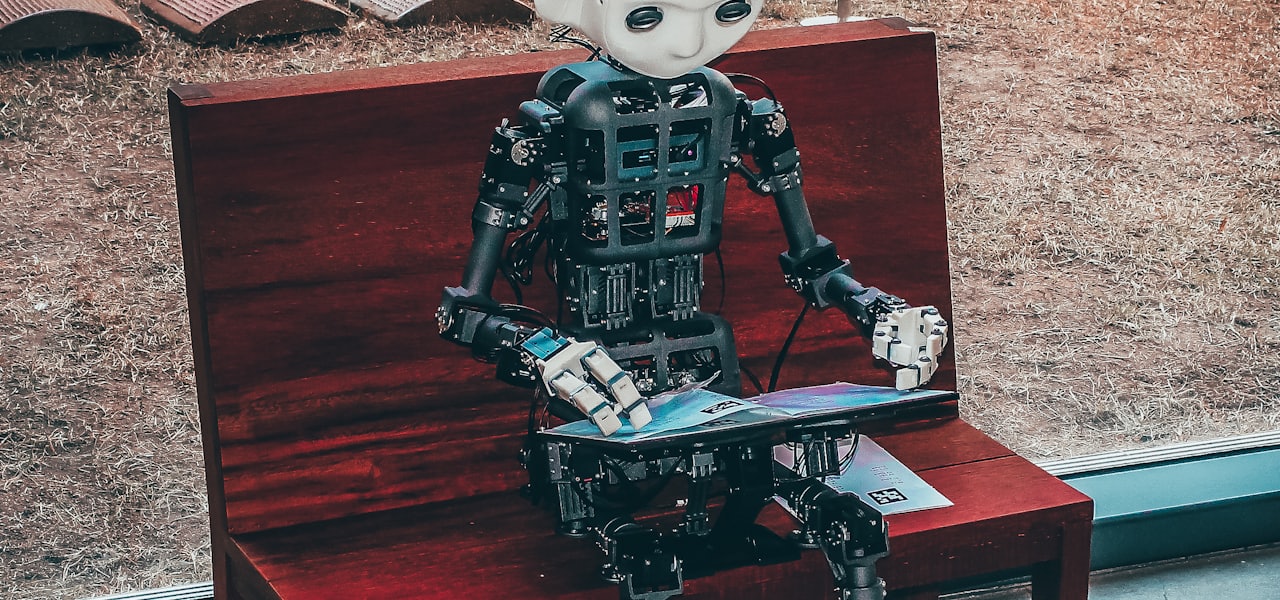
This is a list of algorithm general topics. Analysis of algorithms Ant colony algorithm Approximation algorithm Best and worst cases Big O notation Combinatorial search Competitive analysis Computability theory Computational complexity theory Embarrassingly parallel problem Emergent algorithm Evolutionary algorithm Fast Fourier transform Genetic algorithm Graph exploration algorithm Heuristic Hill climbing Implementation Las Vegas algorithm Lock-free and wait-free algorithms Monte Carlo algorithm Numerical analysis Online algorithm Polynomial time approximation scheme Problem size Pseudorandom number generator Quantum algorithm Random-restart hill climbing Randomized algorithm Running time Sorting algorithm Search algorithm Stable algorithm (disambiguation) Super-recursive algorithm Tree search algorithm
Agent verification
Agent verification is activity to gain assurances that purposeful artificial constructs act in accordance with their specifications. While primitive forms of inorganic agents have been used in manufacturing for centuries, the study of artificial agents did not begin until the mid 20th century. Foundational work on such agents was closely bound with the emergence of artificial intelligence as an academic discipline. Early agents deployed for industrial control systems and in computing were often controlled by quite simple logic however, not involving artificial intelligence as such. When deployed as part of a multi-agent system, even such simple agents could require special agent orientated testing methods, as their collective behaviour was challenging to verify with traditional testing techniques. Difficulties in providing assurances that agents will not behave in dangerous ways became more prevalent after the introduction of LLM agents, especially after the rapid acceleration of their deployment in 2025. The verification of agent behaviour can be conducted by formal or informal methods. Informal verification requires less mathematical skill. But when agents are part of systems where errors have significant risks — such as danger to human life, environmental damage or major financial loss — formal verification is preferred. Both regulators and system designers themselves like formal verification as it provides a high degree of mathematical certainty. It is not however always possible to formally test all aspects of an agent based system's behaviour, especially where newer LLM based agents are concerned, due in part to their high degree of autonomy. Accordingly, agent verification for low impact deployments might be carried out only with informal methods, while for high impact deployments, it may be performed with a mix of formal and informal techniques. == Terminology == In academia, the term agent verification is often defined to mean activity concerned with gaining assurance that the agent behaves in accordance with its specification - whether by processes such as testing or simulation. 'Verification' is typically contrasted with 'validation', the latter meaning activity concerned with checking that the specification itself meets user or real world needs. Such definitions are not universally adhered to however - for example, in some workplaces and documents, the words 'verification' and 'validation' can be used synonymously. Efforts to gain confidence in Agents have intensified sharply since 2025 due to the rapid roll out of LLM agents; different terms are sometimes used in the commercial sector. Here the term 'agent verification' can be used in the same sense as it is in academia, but sometimes the same activity can be covered by more ambiguous and wider ranging terms such as 'Agent governance' , 'Agent observability' or 'AI agent policing'. == History == === Classical agents === The theoretical underpinnings for artificial (inorganic) agents emerged in the mid 20th century, with establishment of cybernetics and artificial intelligence. Oliver Selfridge's 1958 Pandemonium - A Paradigm for Learning paper was an important early theoretical contribution in establishing agent oriented architecture. Practical implementations of agents for real world applications began to become widespread in the 1990s, after the introduction of the belief–desire–intention software model (BDI), and agent-oriented programming. Pure digital agents were deployed in computer infrastructure for purposes such as monitoring, while agents connected to real-world sensors and actuators were increasingly used in industrial control systems. While the concept of artificial agents was interwoven with early artificial intelligence studies right from the start, early agents lacked general purpose reasoning capabilities, often only having simple if then logic. Even a device as simple as a thermostat, which has a sensor and a means of acting, can be considered a proto agent in this sense. Verifying the behaviours of a simple single agent system is not generally especially difficult, but it can be a different matter when several simple agents coexist in the same system. Craig Reynolds's work on boids showed that relatively complex, "intelligent" behaviour can emerge from a number of such simple agents working together in a Multi-agent system (MAS). By the 1990s, even the behaviour of a single agent system could sometimes be quite complex; in accordance with the Belief–desire–intention software model, agents could have believes that might evolve over time. Agents were increasingly introduced that were controlled by quite large decision tree models, which had new vulnerabilities to adversarial attack. It was becoming increasingly apparent that traditional software verification methods had limitations for testing such agents, or even for the more primitive type of agents when they were deployed as part of a MAS. It was the use of agents for industrial control systems, sometimes associated with robotics, that lent urgency to the practice of agent verification. Informal testing might be acceptable for digital agents used say to monitor whether each of an organisation's computers are properly licensed. But with an increasing potential for faulty agents to result in a failure that might cause a large fire to break out at a chemical manufacturing plant, a botched medical operation, or even a crashed aircraft, the need to develop reliable means of verifying behaviour of such agents was considered urgent. The Foundation for Intelligent Physical Agents was established in 1996. From the late 90s, a growing number of industry and university based scientists began working on the problem, with researchers publishing papers on the verification of both single and multi agent systems. Much of this work showed how formal verification techniques like model checking could be used to gain a high level of assurance that agent based systems would conform with their specification. A 2018 systematic review covering 231 studies found that model checking was the most common technique for agent verification, with theorem proving the second most commonly used formal verification method. In the first two decades of the 20th century, agents run by AI became more common, with Siri and Alexa being well known examples. But such agents still lacked general reasoning capabilities and did not pose new pressing problems for agent verification. === General purpose reasoning agents === The advent of LLMs created huge potential for further use of artificial agents, as agents based on them could have general purpose cognitive abilities. Agents run by LLMs (and occasionally non-LLM foundation models) have similar vulnerability to adversarial attack as those run by decision tree models. The wider scope of actions for LLM agents has created new challenges for their verification, over and above those present for classical agents. For example, the LLM's neural network endows it with infinite domains, an especial challenge for traditional formal verification techniques. Academics began to study the problems involved in verifying LLM agents from 2018. Deployment of such agents began to accelerate in late 2023 after OpenAI's "function-calling" API was made available, and especially after Anthropic's late 2024 introduction of Model Context Protocol (MCP), a standardised way for LLM agents to gain contextual awareness, and to act on the world by calling various external tools. The rapid rollout of LLM agents following MCP's release has seen the task of agent verification receive increased attention within academia, and also from the private sector. In 2024 and 2025 several startups focusing on LLM agent verification have been founded in both Europe and the US to meet growing demand. == Approaches == === Formal verification === Formal verification involves proving the correctness of some or all aspects of a system using mathematical methods. Such methods can range from manual formal proof, to verification assisted with automated theorem provers like Isabelle. For agent verification, model checking is by far the most frequently used formal verification method; for pre-LLM models it was often complemented with techniques using computation tree logic. Another common method is theorem proving. Formal verification provides a higher degree of confidence than informal methods, but it is not always used, even when it is possible. Sometimes a person or organisation developing software agents won't have the necessary skills, or may not see it as worth the effort if the agent(s) will not have the ability to cause much harm even if they malfunction. When agents are deployed in systems where errors could have serious consequences, the ability of formal verification methods to provide mathematical certainty tends to be strongly preferred by both regulators and designers themselves. But even for high impact systems, formal verificatio
Photometric stereo
Photometric stereo is a technique in computer vision for estimating the surface normals of objects by observing that object under different lighting conditions (photometry). It is based on the fact that the amount of light reflected by a surface is dependent on the orientation of the surface in relation to the light source and the observer. By measuring the amount of light reflected into a camera, the space of possible surface orientations is limited. Given enough light sources from different angles, the surface orientation may be constrained to a single orientation or even overconstrained. The technique was originally introduced by Woodham in 1980. The special case where the data is a single image is known as shape from shading, and was analyzed by B. K. P. Horn in 1989. Photometric stereo has since been generalized to many other situations, including extended light sources and non-Lambertian surface finishes. Current research aims to make the method work in the presence of projected shadows, highlights, and non-uniform lighting. Photometric stereo is widely used in various fields, including archaeology, cultural heritage conservation, and quality control. It is now integrated into widely used open-source software, such as Meshroom. == Basic method == Under Woodham's original assumptions — Lambertian reflectance, known point-like distant light sources, and uniform albedo — the problem can be solved by inverting the linear equation I = L ⋅ n {\displaystyle I=L\cdot n} , where I {\displaystyle I} is a (known) vector of m {\displaystyle m} observed intensities, n {\displaystyle n} is the (unknown) surface normal, and L {\displaystyle L} is a (known) 3 × m {\displaystyle 3\times m} matrix of normalized light directions. This model can easily be extended to surfaces with non-uniform albedo, while keeping the problem linear. Taking an albedo reflectivity of k {\displaystyle k} , the formula for the reflected light intensity becomes I = k ( L ⋅ n ) . {\displaystyle I=k(L\cdot n).} If L {\displaystyle L} is square (there are exactly 3 lights) and non-singular, it can be inverted, giving L − 1 I = k n . {\displaystyle L^{-1}I=kn.} Since the normal vector is known to have length 1, k {\displaystyle k} must be the length of the vector k n {\displaystyle kn} , and n {\displaystyle n} is the normalised direction of that vector. If L {\displaystyle L} is not square (there are more than 3 lights), a generalisation of the inverse can be obtained using the Moore–Penrose pseudoinverse, by simply multiplying both sides with L T {\displaystyle L^{T}} , giving L T I = L T k ( L ⋅ n ) , {\displaystyle L^{T}I=L^{T}k(L\cdot n),} ( L T L ) − 1 L T I = k n , {\displaystyle (L^{T}L)^{-1}L^{T}I=kn,} after which the normal vector and albedo can be solved as described above. == Non-Lambertian surfaces == The classical photometric stereo problem concerns itself only with Lambertian surfaces, with perfectly diffuse reflection. This is unrealistic for many types of materials, especially metals, glass and smooth plastics, and will lead to aberrations in the resulting normal vectors. Many methods have been developed to lift this assumption. In this section, a few of these are listed. === Specular reflections === Historically, in computer graphics, the commonly used model to render surfaces started with Lambertian surfaces and progressed first to include simple specular reflections. Computer vision followed a similar course with photometric stereo. Specular reflections were among the first deviations from the Lambertian model. These are a few adaptations that have been developed. Many techniques ultimately rely on modelling the reflectance function of the surface, that is, how much light is reflected in each direction. This reflectance function has to be invertible. The reflected light intensities towards the camera is measured, and the inverse reflectance function is fit onto the measured intensities, resulting in a unique solution for the normal vector. === General BRDFs and beyond === According to the Bidirectional reflectance distribution function (BRDF) model, a surface may distribute the amount of light it receives in any outward direction. This is the most general known model for opaque surfaces. Some techniques have been developed to model (almost) general BRDFs. In practice, all of these require many light sources to obtain reliable data. These are methods in which surfaces with general BRDFs can be measured. Determine the explicit BRDF prior to scanning. To do this, a different surface is required that has the same or a very similar BRDF, of which the actual geometry (or at least the normal vectors for many points on the surface) is already known. The lights are then individually shone upon the known surface, and the amount of reflection into the camera is measured. Using this information, a look-up table can be created that maps reflected intensities for each light source to a list of possible normal vectors. This puts constraints on the possible normal vectors the surface may have, and reduces the photometric stereo problem to an interpolation between measurements. Typical known surfaces to calibrate the look-up table with are spheres for their wide variety of surface orientations. Restricting the BRDF to be symmetrical. If the BRDF is symmetrical, the direction of the light can be restricted to a cone about the direction to the camera. Which cone this is depends on the BRDF itself, the normal vector of the surface, and the measured intensity. Given enough measured intensities and the resulting light directions, these cones can be approximated and therefore the normal vectors of the surface. Some progress has been made towards modelling an even more general surfaces, such as Spatially Varying Bidirectional Distribution Functions (SVBRDF), Bidirectional surface scattering reflectance distribution functions (BSSRDF), and accounting for interreflections. However, such methods are still fairly restrictive in photometric stereo. Better results have been achieved with structured light. == Uncalibrated photometric stereo == Uncalibrated Photometric Stereo is an approach in photometric stereo that aims to reconstruct the 3D shape of an object from images captured under unknown lighting conditions. Unlike classical methods, which often assume controlled or known lighting setups, this approach removes these constraints, making it adaptable to diverse and real-world environments. The advent of deep learning has revolutionized universal PS by replacing handcrafted assumptions with data-driven models. Recent approaches leverage Transformer-based architectures and multi-scale encoder–decoder networks to directly estimate surface normals from input images. Uncalibrated Photometric Stereo is inherently an ill-posed problem, as it attempts to recover 3D shape and lighting conditions simultaneously from images alone. This leads to fundamental ambiguities in the reconstruction process, which manifest as systematic errors in the recovered geometry, including global distortions in the object's overall shape, and misinterpretation of surface orientation, where concave regions may appear convex and vice versa. To address the challenges of uncalibrated photometric stereo, hybrid methods have emerged that combine multi-view stereo and photometric stereo. These approaches leverage the strengths of both techniques, including geometric reliability and resolution.
NetOwl
NetOwl is a suite of multilingual text and identity analytics products that analyze big data in the form of text data – reports, web, social media, etc. – as well as structured entity data about people, organizations, places, and things. NetOwl utilizes artificial intelligence (AI)-based approaches, including natural language processing (NLP), machine learning (ML), and computational linguistics, to extract entities, relationships, and events; to perform sentiment analysis; to assign latitude/longitude to geographical references in text; to translate names written in foreign languages; and to perform name matching and identity resolution. NetOwl's uses include semantic search and discovery, geospatial analysis, intelligence analysis, content enrichment, compliance monitoring, cyber threat monitoring, risk management, and bioinformatics. == History == The first NetOwl product was NetOwl Extractor, which was initially released in 1996. Since then, Extractor has added many new capabilities, including relationship and event extraction, categorization, name translation, geotagging, and sentiment analysis, as well as entity extraction in other languages. Other products were added later to the NetOwl suite, namely TextMiner, NameMatcher, and EntityMatcher. NetOwl has participated in several 3rd party-sponsored text and entity analytics software benchmarking events. NetOwl Extractor was the top-scoring named entity extraction system at the DARPA-sponsored Message Understanding Conference MUC-6 and the top-scoring link and event extraction system in MUC-7. It was also the top-scoring system at several of the NIST-sponsored Automatic Content Extraction (ACE) evaluation tasks. NetOwl NameMatcher was the top-scoring system at the MITRE Challenge for Multicultural Person Name Matching. == Products == The NetOwl suite includes, among others, the following text and entity analytics products: === Text Analytics === NetOwl Extractor performs entity extraction from unstructured texts using natural language processing (NLP), machine learning (ML), and computational linguistics. Extractor also performs semantic relationship and event extraction as well as geotagging of text. It is used for a variety of data sources including both traditional sources (e.g., news, reports, web pages, email) and social media (e.g., Twitter, Facebook, chats, blogs). It runs on a variety of Big Data analytics platforms, including Apache Hadoop and LexisNexis’s High-Performance Computer Cluster (HPCC) technology. It has been integrated with a number of 3rd party analytical tools such as Esri ArcGIS and Google Earth/Maps. === Identity Analytics === NetOwl NameMatcher and EntityMatcher perform name matching and identity resolution for large multicultural and multilingual entity databases using machine learning (ML) and computational linguistics approaches. They are used for applications such as anti–money laundering (AML), watch lists, regulatory compliance, fraud detection, etc.
LMArena
Arena (formerly LMArena and Chatbot Arena) is a public, web-based platform that evaluates large language models (LLMs). Users enter prompts for two anonymous models to respond to and vote on the model that gave the better response, after which the models' identities are revealed. Users can also choose models to test themselves via the "Direct" selection. Companies which have supplied the company with their large language models include OpenAI, Google DeepMind, and Anthropic. The website has been used for preview releases of upcoming models. Chinese company DeepSeek tested its prototype models in the Arena months before its R1 model gained attention in Western media. Other notable pre-release models include OpenAI's GPT-5 under the codename "summit" and Google DeepMind's Gemini 2.5 Flash Image (an image-generation and editing model) under the codename "Nano Banana". Research has identified specific limitations in Arena's methodology. == History == Chatbot Arena was released on April 24, 2023. In June 2024, Chatbot Arena added image support. In September 2024, Chatbot Arena moved to its own dedicated domain name, lmarena.ai (or LMArena). In April 2025, Meta released Llama 4. Llama 4 Maverick beat GPT-4o and Gemini 2.0 Flash on LMArena, but the version of Maverick on LMArena unfairly differed from the publicly available version. LMArena updated their policies in response. In April 2025, LMArena incorporated as an independent company. That May, LMArena raised $100 million in a seed funding round, valuing the company at $600 million. Participants in the seed funding round included Andreessen Horowitz, UC Investments, Lightspeed Venture Partners, Felicis Ventures, and Kleiner Perkins. On January 6, 2026, LMArena announced the closing of a $150 million Series A funding round, bringing the company’s post-money valuation to approximately $1.7 billion. The round was led by Felicis and UC Investments (University of California), with participation from Andreessen Horowitz, The House Fund, LDVP, Kleiner Perkins, Lightspeed Venture Partners, and Laude Ventures. In January 2026, LMArena added video support. On January 28, 2026, LMArena rebranded to "Arena".
Computer appliance
A computer appliance is a computer system with a combination of hardware, software, or firmware that is specifically designed to provide a particular computing resource. Such devices became known as appliances because of the similarity in role or management to a home appliance, which are generally closed and sealed, and are not serviceable by the user or owner. The hardware and software are delivered as an integrated product and may even be pre-configured before delivery to a customer, to provide a turn-key solution for a particular application. Unlike general purpose computers, appliances are generally not designed to allow the customers to change the software and the underlying operating system, or to flexibly reconfigure the hardware. Another form of appliance is the virtual appliance, which has similar functionality to a dedicated hardware appliance, but is distributed as a software virtual machine image for a hypervisor-equipped device. == Overview == Traditionally, software applications run on top of a general-purpose operating system, which uses the hardware resources of the computer (primarily memory, disk storage, processing power, and networking bandwidth) to meet the computing needs of the user. The main issue with the traditional model is related to complexity. It is complex to integrate the operating system and applications with a hardware platform, and complex to support it afterwards. By tightly constraining the variations of the hardware and software, the appliance becomes easily deployable, and can be used without nearly as wide (or deep) IT knowledge. Additionally, when problems and errors appear, the supporting staff very rarely needs to explore them deeply to understand the matter thoroughly. The staff needs merely training on the appliance management software to be able to resolve most of problems. In all forms of the computer appliance model, customers benefit from easy operations. The appliance has exactly one combination of hardware and operating system and application software, which has been pre-installed at the factory. This prevents customers from needing to perform complex integration work, and dramatically simplifies troubleshooting. In fact, this "turnkey operation" characteristic is the driving benefit that customers seek when purchasing appliances. To be considered an appliance, the (hardware) device needs to be integrated with software, and both are supplied as a package. This distinguishes appliances from "home grown" solutions, or solutions requiring complex implementations by integrators or value-added resellers (VARs). The appliance approach helps to decouple the various systems and applications, for example in the data center. Once a resource is decoupled, in theory it can be also centralized to become shared among many systems, centrally managed and optimized, all without requiring changes to any other system. == Tradeoffs of the computer appliance approach == The major disadvantage of deploying a computer appliance is that since they are designed to supply a specific resource, they most often include a customized operating system running over specialized hardware, neither of which are likely to be compatible with the other systems previously deployed. Customers lose flexibility. One may believe that a proprietary embedded operating system, or operating system within an application, can make the appliance much more secure from common cyber attacks. However, the opposite is true. Security by obscurity is a poor security decision, and appliances are often plagued by security issues as evidenced by the proliferation of IoT devices. == Types of appliances == The variety of computer appliances reflects the wide range of computing resources they provide to applications. Some examples: Storage appliances provide large amounts of storage, often available to many machines on the network. See Network-attached storage and Storage area network. Network appliances are general purpose routers which may also provide firewall protection, Transport Layer Security (TLS), messaging, access to specialized networking protocols (like the ebXML Message Service) and bandwidth multiplexing for the multiple systems they front-end. Backup and disaster recovery appliances computer appliances that are integrated backup software and backup targets, sometimes with hypervisors to support local DR of protected servers. They are often a gateway to a full DRaaS solution. Firewall and Security appliances Dedicated network appliances that are designed to protect computer networks from unwanted traffic. IIoT and MES Gateway appliances Computer appliances that are designed to translate data bidirectionally between control systems and enterprise systems. Proprietary, embedded, firmware applications running on the appliance use point-to-point connections to translate data between field devices in their native automation protocols and MES systems through their APIs, ODBC, or RESTful interfaces. Anti-spam appliances for e-mail spam Software appliances A single application server appliance, with just enough operating system (JeOS) for it to run. Virtual machine appliances consist of a "hypervisor style" embedded operating system running on appliance hardware. The hypervisor layer is matched to the hardware of the appliance, and cannot be varied by the customer, but the customer may load other operating systems and applications onto the appliance in the form of virtual machines. == Consumer appliances == Aside from its deployment within data centers, many computer appliances are directly used by the general public. These include: Digital video recorder Residential gateway Network-attached storage (NAS) Video game console Consumer uses stress the need for an appliance to have easy installation, configuration, and operation, with little or no technical knowledge being necessary. == Appliances in industrial automation == The world of industrial automation has been rich in appliances. These appliances have been hardened to withstand temperature and vibration extremes. These appliances are also highly configurable, enabling customization to meet a wide variety of applications. The key benefits of an appliance in automation are: Reduced downtime - a failed appliance is typically replaced with a COTS replacement and its task is quickly and easily reloaded from a backup. Highly scalable - appliances are typically targeted solutions for an area of a plant or process. As the requirements change, scalability is achieved through the installation of another appliance. Automation concepts are easily replicated throughout the enterprise by standardizing on appliances to perform the needed tasks, as opposed to the development of custom automation schemes for each task. Low TCO (total cost of ownership) - appliances are developed, tested and supported by automation product vendors and undergo a much broader level of quality testing than custom designed automation solutions. The use of appliances in automation reduce the level of testing needed in each individual application. Reduced design time - appliances perform specific functions and although they are highly configurable, they are typically self documenting. This enables appliance based solutions to be transferred from engineer to engineer with minimal need for training and documentation. Types of automation appliances: PLC (programmable logic controller) - Programmable logic controllers are appliances that are typically used for discrete control and offer a wide range of Input and Output options. They are configured through standardized programming languages such as IEC-1131. PID (proportional–integral–derivative controller) - PID controllers are appliances that monitor a process variable and, based on an error term, effect change on a control output (manipulated variable) to drive the process variable to a setpoint. PAC (programmable automation controller) - Programmable automation controllers are appliances that embody properties of both PLCs and PID controllers enabling the integration of both analog and discrete control. Universal gateway - A universal gateway appliance has the ability to communicate with a variety of devices through their respective communication protocols, and will affect data transactions between them. This in increasingly important as manufacturing strives to improve agility, quality, production rates, production costs and reduce downtime through enhanced M2M (machine to machine) communications. EATMs (Enterprise Appliance Transaction Modules) - Enterprise appliance transaction modules are appliances that affect data transactions from plant floor automation systems to enterprise business systems. They communicate to plant floor equipment through various vendor automation protocols, and communicate to business systems through database communication protocols such as JMS (Java Message Service) and SQL (Structured Query Language). == Internal structure == There are several
Phrase structure grammar
The term phrase structure grammar was originally introduced by Noam Chomsky as the term for grammar studied previously by Emil Post and Axel Thue (Post canonical systems). Some authors, however, reserve the term for more restricted grammars in the Chomsky hierarchy: context-sensitive grammars or context-free grammars. In a broader sense, phrase structure grammars are also known as constituency grammars. The defining character of phrase structure grammars is thus their adherence to the constituency relation, as opposed to the dependency relation of dependency grammars. == History == In 1956, Chomsky wrote, "A phrase-structure grammar is defined by a finite vocabulary (alphabet) Vp, and a finite set Σ of initial strings in Vp, and a finite set F of rules of the form: X → Y, where X and Y are strings in Vp." == Constituency relation == In linguistics, phrase structure grammars are all those grammars that are based on the constituency relation, as opposed to the dependency relation associated with dependency grammars; hence, phrase structure grammars are also known as constituency grammars. Any of several related theories for the parsing of natural language qualify as constituency grammars, and most of them have been developed from Chomsky's work, including Government and binding theory Generalized phrase structure grammar Head-driven phrase structure grammar Lexical functional grammar The minimalist program Nanosyntax Further grammar frameworks and formalisms also qualify as constituency-based, although they may not think of themselves as having spawned from Chomsky's work, e.g. Arc pair grammar, and Categorial grammar.